🔧 Fix-It Guide · free checks first
Why Won't My Garage Door Open?
Honest diagnosis, free checks first, and a straight answer about when it's a pro job. No teaser fees, no scare tactics — that's the whole point of this site.
Honest diagnosis, free checks first, and a straight answer about when it's a pro job. No teaser fees, no scare tactics — that's the whole point of this site.
Press the wall button and watch the opener. No light, no sound? Verify the opener is plugged in, test the outlet with a phone charger, press reset on any garage or nearby GFCI outlet, and check the breaker panel. This two-minute check resolves a real share of dead-opener calls without anyone visiting your house.
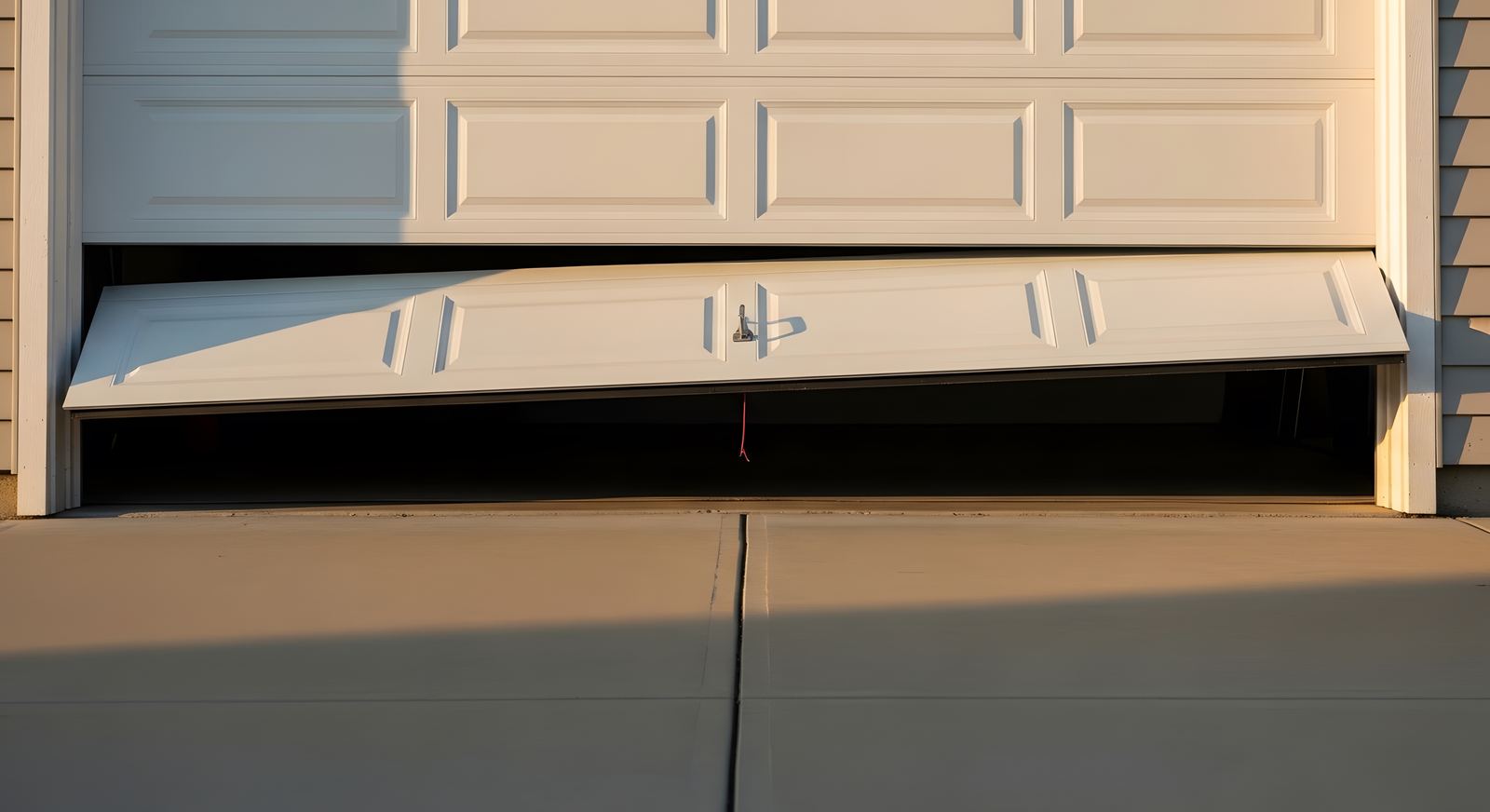
Find the red cord hanging from the trolley on the opener rail. If the trolley was disconnected, pull the cord toward the door until the lever clicks into its engaged position, then run the opener once so the carriage reconnects. If the motor was running while the door stayed put, this is almost certainly your fix.
With the door closed, look at the spring on the shaft above the door opening. A broken torsion spring shows an obvious two-inch gap in the coils. On extension-spring doors, look along both upper tracks for a separated or dangling spring. Do not touch, unwind, or unbolt anything — you are only diagnosing. If you see a gap, stop and call a pro.
If the wall button works but remotes do not, hold the lock button on the wall console for a few seconds to toggle off remote lockout, then test again. Swap fresh batteries into the remote and keypad. If one remote works and another does not, reprogram the dead one with the learn button on the back of the opener.
Start with the boring stuff, because it is the fix a surprising amount of the time. Look up at the opener: is its light on, or does it come on when you press the wall button? If the unit is completely dead, check the outlet it is plugged into — many garages put the opener on a GFCI circuit that trips when a freezer, sump pump, or damp weather upsets it. Press the reset button on any GFCI outlet in the garage or nearby bathroom, and check the breaker panel for a tripped breaker. Also confirm the opener cord did not vibrate loose from the ceiling outlet, which genuinely happens on older installs. If the outlet works (test it with a phone charger) but the opener is still dead, the unit itself has failed — usually the logic board or transformer — and that is a repair-or-replace conversation with a technician rather than anything you can reset.
Every opener has a red emergency release cord hanging from the trolley — the carriage that slides along the rail. Pulling it disconnects the door from the opener so you can lift the door by hand during a power outage. If it was pulled (kids are fond of it, and people grab it during outages and forget), the motor will run happily along the rail while the door sits still. To re-engage most openers, pull the cord back toward the door until you feel or hear the trolley lever snap into position, then run the opener; the trolley will click back onto the carriage as it passes. Some models re-engage just by running the opener once. Check your model's routine if it does not catch on the first pass. This fix costs nothing and takes under a minute — always rule it out before assuming something is broken.
Springs do the real lifting; the opener only guides the door. A typical double-car door weighs 130 to 350 pounds, and the torsion spring above the door (or extension springs along the tracks) counterbalances nearly all of it. When a spring breaks — usually with a loud bang — the opener suddenly faces the door's full weight. The symptoms: the motor strains or hums, the door rises a few inches and stops, or the opener's safety logic gives up entirely. Confirm it by looking, not touching. On a torsion setup, look at the spring on the shaft above the door: a break shows as a clean two-inch gap in the coil. On extension springs, look for a dangling or separated spring beside the upper track. Spring replacement is genuinely dangerous DIY territory — the spring stores enormous twisting force — so this one goes straight to a professional. More on that on our broken-spring page.
If the wall button opens the door but the remotes and keypad do not, the door itself is fine — you have a radio problem. Fresh batteries fix most of it; keypad batteries in particular die quietly after a couple of years. If batteries do not help, check the wall console for a lock or vacation button. On Chamberlain and LiftMaster wall consoles, holding the lock button engages a mode that deliberately ignores all remotes — households turn it on by accident constantly. Hold the lock button a few seconds to toggle it off, then test the remote. Still nothing? Reprogram the remote to the opener using the learn button on the back of the motor unit — the memory occasionally drops codes after power surges. If no remote will program, the opener's radio receiver or logic board may have failed, which is technician territory.
Yes, and it is one of the most seasonal calls in the business. Cold thickens old grease in rollers and hinges, stiffens the springs slightly, and can freeze the bottom weather seal to the concrete after a wet night. If the opener strains in January but was fine in October, first check the bottom seal: gently break any ice bond by hand (do not run the opener against it — you can tear the seal or strip the opener's gear). Then lubricate rollers, hinges, and the spring coil with a garage-door-rated silicone or white lithium spray — not a penetrating oil like standard WD-40, which displaces grease rather than replacing it. Some openers also have a force adjustment that was set in warm weather and is now marginal; a small increase can help, but if you find yourself cranking force up substantially to move the door, the door is binding and needs service, because high force settings defeat the safety reversal.
A hum with no movement narrows things down. If the trolley is engaged and the motor hums, three suspects lead the list. First, a broken spring — the motor is trying and failing to lift dead weight; check for the spring gap described above. Second, a stripped drive gear: on many chain-drive Chamberlain and LiftMaster units, the main drive gear is nylon by design, and after 10 to 15 years it wears down and the motor spins without moving the chain. You will often find white plastic shavings inside or under the motor housing — a telltale sign. Third, a failing start capacitor, common on older AC-motor openers: the motor hums, and sometimes the door will move if you give it a small assist (do not make a habit of this). Gear kits and capacitors are inexpensive parts, but replacement involves disassembling the powerhead, so most homeowners hand it to a tech and it is a quick visit.
Two usual reasons: the outage tripped a GFCI outlet or breaker feeding the opener, or someone pulled the red release cord to open the door manually and never re-engaged it. Restore power, then pull the release cord toward the door and run the opener once so the trolley reconnects. Surges can also corrupt remote programming, so reprogram remotes if needed.
Yes — with the door fully closed, pull the red release cord and lift the door by hand. A healthy, balanced door lifts easily and stays put halfway up. If it feels like dead weight, a spring is likely broken; stop and get help lifting rather than straining, and call a pro for the spring.
The classic sign of a broken spring: the opener lifts a few inches, senses excessive load, and stops as a protective measure. Look for a gap in the spring coil above the door. Less often it is an obstruction in the track or a binding roller — look and listen for where it stops.
Most openers run 10 to 15 years. Chain-drive units often need a drive gear replacement in that window, and logic boards are the common end-of-life failure. If yours predates 1993 it lacks federally required photo-eye entrapment protection under 16 CFR 1211, and replacement is worth discussing regardless of the current symptom.
Talk to a local garage-door pro now. Free to call, no obligation, honest answers — the way it should be.