Everything a Delaware homeowner should know before hiring garage-door help: who's required to hold a license, how to verify one, what the codes say, and which local pages cover your city. One call connects you with an independent local pro: (888) 830-7442.

Delaware does not issue a state trade-competency license for general or garage door contractors, but every contractor doing business in the state must obtain a Delaware business license from the Division of Revenue and, for construction activity, register as a contractor for gross receipts tax purposes; non-resident contractors have additional bonding and registration obligations on larger jobs. Practical regulation happens at the county and municipal level: New Castle County, Kent County, Sussex County, and many towns require their own contractor licenses or registrations tied to their permitting systems, so a garage door company working near the beaches typically holds a state business license plus a Sussex County license. Trade licenses do exist for electricians (through the Division of Professional Regulation), which applies when opener circuits are wired. Homeowners can confirm that a company holds an active Delaware business license through the Division of Revenue's public search, and should also confirm county or municipal licensing where the property is located.
Verify before you hire: Delaware Division of Revenue Business License Search. It takes a minute, it's free, and it's the single strongest scam filter available to a homeowner.
Permitting is handled by Delaware's three counties and incorporated municipalities. A like-for-like garage door replacement is often exempt as ordinary repair, but permits are required when the opening is enlarged, headers or framing change, or a garage is built or converted; some jurisdictions ask for a permit on any door replacement in high-wind coastal zones so wind ratings can be verified. Electrical permits apply to new opener wiring. Sussex County and beach towns are the most exacting, so homeowners should confirm with the local building department.
Delaware jurisdictions enforce residential codes based on recent International Residential Code editions, and design wind speeds increase toward the Atlantic coast. In coastal Sussex County, sites near the shoreline fall into higher wind-speed zones, and garage doors there must be rated and labeled for the applicable design pressures; wind-load-reinforced doors are standard practice in beach communities. Because the garage door is a home's largest opening, a door failure during a coastal storm can pressurize the structure, which is why inspectors in coastal zones look for design-pressure labels on replacement doors.
Delaware's climate risks split by geography. Along the Atlantic coast and Inland Bays, salt-laden air is the dominant threat, corroding springs, cables, fasteners, and track hardware well ahead of inland schedules โ rust is the leading cause of premature garage door component failure at the beaches. Statewide, humid summers promote condensation and surface rust inside garages, while winters bring enough freeze-thaw cycling to contribute to spring fatigue, particularly in northern New Castle County. Coastal storms and nor'easters add wind-driven rain against seaward doors. Corrosion-resistant hardware, periodic fresh-water rinsing, and frequent lubrication are the standard countermeasures.
Salt air and humidity work on Delaware garage hardware year-round: cables fray from the inside, springs pit, and fasteners seize. Coastal homes here earn their reputation for eating hardware โ stainless and coated options exist for a reason.
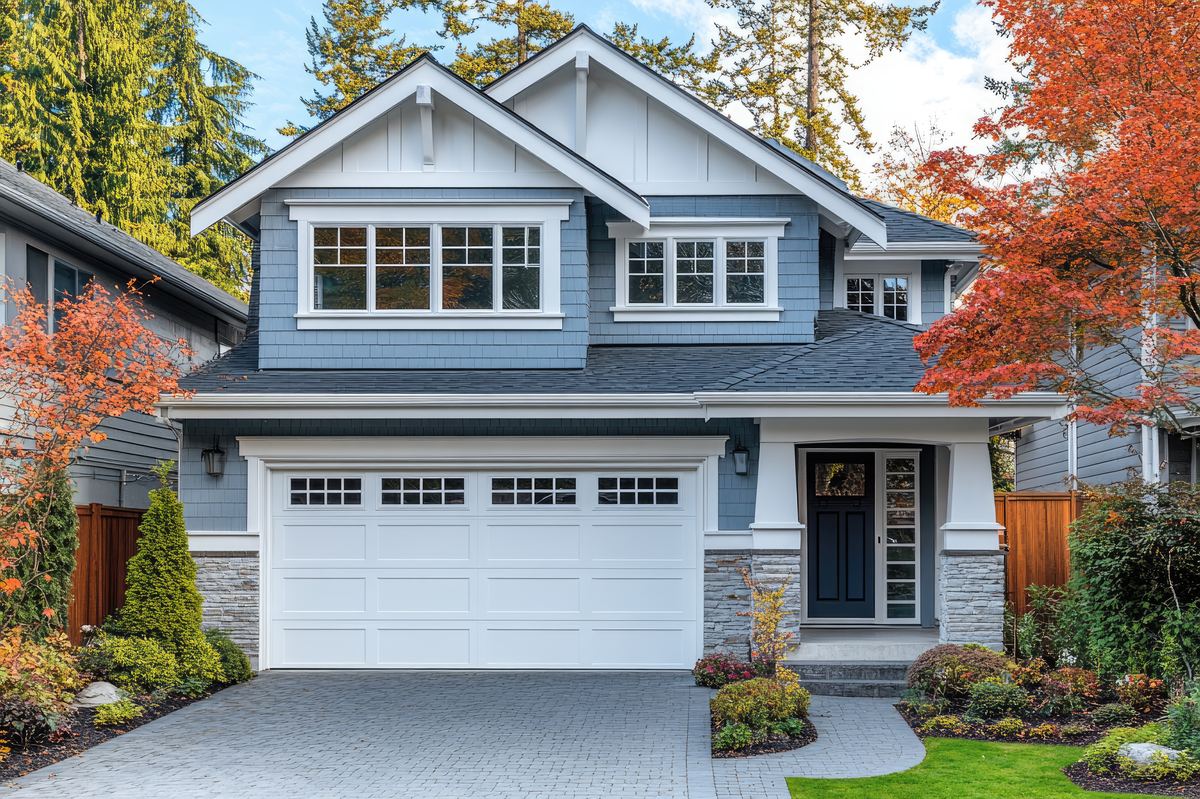
Here's a fact that surprises most Delaware homeowners: garage doors are covered by federal safety law. Since January 1, 1993, every residential opener sold in the U.S. must reverse automatically on contact with an obstruction โ entrapment protection required by UL 325 and 16 CFR Part 1211, standards written after documented child entrapment deaths.
The test takes thirty seconds and a scrap of lumber: lay a 2ร4 flat where the door meets the floor and press close. The door must reverse the moment it touches. If it doesn't โ or if your opener has no photo-eyes near the floor at all โ it predates or fails the standard, and that's precisely the kind of fix worth a professional visit.
Sources: U.S. Consumer Product Safety Commission ยท UL Standards & Engagement ยท 16 CFR Part 1211 ยท DASMA
This industry's fake-storefront problem is real enough that search engines purge garage-door listings in waves. Five minutes of checking beats a driveway dispute every time.
Start with Delaware Division of Revenue Business License Search. A current credential is the baseline โ not proof of quality, but its absence is disqualifying in a state that requires one. Ask for the number over the phone; legitimate companies volunteer it.
Parts named, labor separated, warranty terms in writing โ before work begins. The signature scam in this trade is the advertised teaser fee that balloons on the driveway; a written quote is its natural enemy.
General liability and workers' comp protect you if a spring job goes wrong on your property. Reviews can be manufactured; certificates of insurance are harder to fake and any established Delaware outfit can produce one.
Fake garage-door listings borrow retail addresses and virtual offices. Map the address you're given. A service-area business with no storefront can still be legitimate โ but it should say so plainly rather than borrowing someone else's building.
Deposits are normal for custom doors; full prepayment for a repair is not. Standard practice in Delaware is payment on completion โ and a pro confident in their work has no reason to ask otherwise.
Every call type routes to an independent local professional โ ordered here by what Delaware's climate actually breaks first.
Quiet nylon rollers and true track turn a banging door into a background hum.
Learn more โWeatherproofingThe easiest comfort upgrade in the house is at the bottom of the garage door.
Learn more โMoney callCycle-rated replacements installed with winding bars and respect for stored energy.
Learn more โOpenersThe motor is rarely the whole story โ force settings, sensors, and gears tell the rest.
Learn more โOff-trackRe-seated, re-aligned, and root-caused so it doesn't jump again next month.
Learn more โPanelsMatch the profile, match the color, keep the rest of a perfectly good door.
Learn more โBig ticketMeasured twice, sprung correctly, sealed at the edges โ and the old door hauled away.
Learn more โ24/7Off-hours calls routed to pros who actually answer at off hours.
Learn more โCommercialRolling steel, high-cycle springs, and operators specced for daily punishment.
Learn more โTune-upSmall adjustments now beat big invoices later โ the whole trade in one sentence.
Learn more โSmartOpeners that text you when the door's been open twenty minutes. Peace of mind, installed.
Learn more โStorm-ratedWhen the forecast turns serious, the garage door is the house's front line.
Learn more โIn our 39-state Garage Door Failure Risk Index, Delaware ranks #25 of 39 with an index score of 37.5. The median Delaware home was built in 1992 โ before the 1993 federal auto-reverse requirement, which means a meaningful share of openers here were never covered by the modern entrapment standard. About 71.0% of occupied homes are owner-occupied โ and owners, not landlords, make the maintenance decisions that keep doors alive.
Coastal air sets the Delaware maintenance rhythm: salt and humidity work on springs, cables, and fasteners every month of the year, so the calendar here is less seasonal than continuous. Twice-a-year lubrication with a marine-grade product beats the annual habit inland homeowners get away with. Watch cables especially โ corrosion frays them from the inside where it's hardest to see. When replacement time comes, coated hardware and stainless options cost more up front and repay it in years of service.
The biggest Delaware markets we cover, with the full city list below. Each page carries local housing data, the free checks, and direct routing to a pro serving that area.
| City | Covered population | Median home built | ZIPs |
|---|---|---|---|
| Wilmington | 219,376 | 1957 | 25 |
| Newark | 142,233 | 1977 | 10 |
| Dover | 77,274 | 1988 | 5 |
| New Castle | 60,593 | 1971 | 3 |
| Middletown | 50,542 | 2005 | 1 |
| Bear | 44,801 | 1995 | 1 |
| Millsboro | 34,892 | 2002 | 1 |
| Lewes | 29,599 | 2003 | 1 |
| Smyrna | 27,164 | 2002 | 1 |
| Seaford | 25,786 | 1986 | 1 |
Delaware does not issue a state trade-competency license for general or garage door contractors, but every contractor doing business in the state must obtain a Delaware business license from the Division of Revenue and, for construction activity, register as a contractor for gross receipts tax purposes; non-resident contractors have additional bonding and registration obligations on larger jobs. Use the official lookup to verify before hiring.
Use Delaware Division of Revenue Business License Search โ the official lookup. A legitimate company will volunteer its credential number; hesitation is an answer too.
Permitting is handled by Delaware's three counties and incorporated municipalities. A like-for-like garage door replacement is often exempt as ordinary repair, but permits are required when the opening is enlarged, headers or framing change, or a garage is built or converted; some jurisdictions ask for a permit on any door replacement in high-wind coastal zones so wind ratings can be verified. Electrical permits apply to new opener wiring. Sussex County and beach towns are the most exacting, so homeowners should confirm with the local building department.
Salt air and humidity work on Delaware garage hardware year-round: cables fray from the inside, springs pit, and fasteners seize. Coastal homes here earn their reputation for eating hardware โ stainless and coated options exist for a reason.
Talk to a local garage-door pro now. Free to call, no obligation, honest answers โ the way it should be.