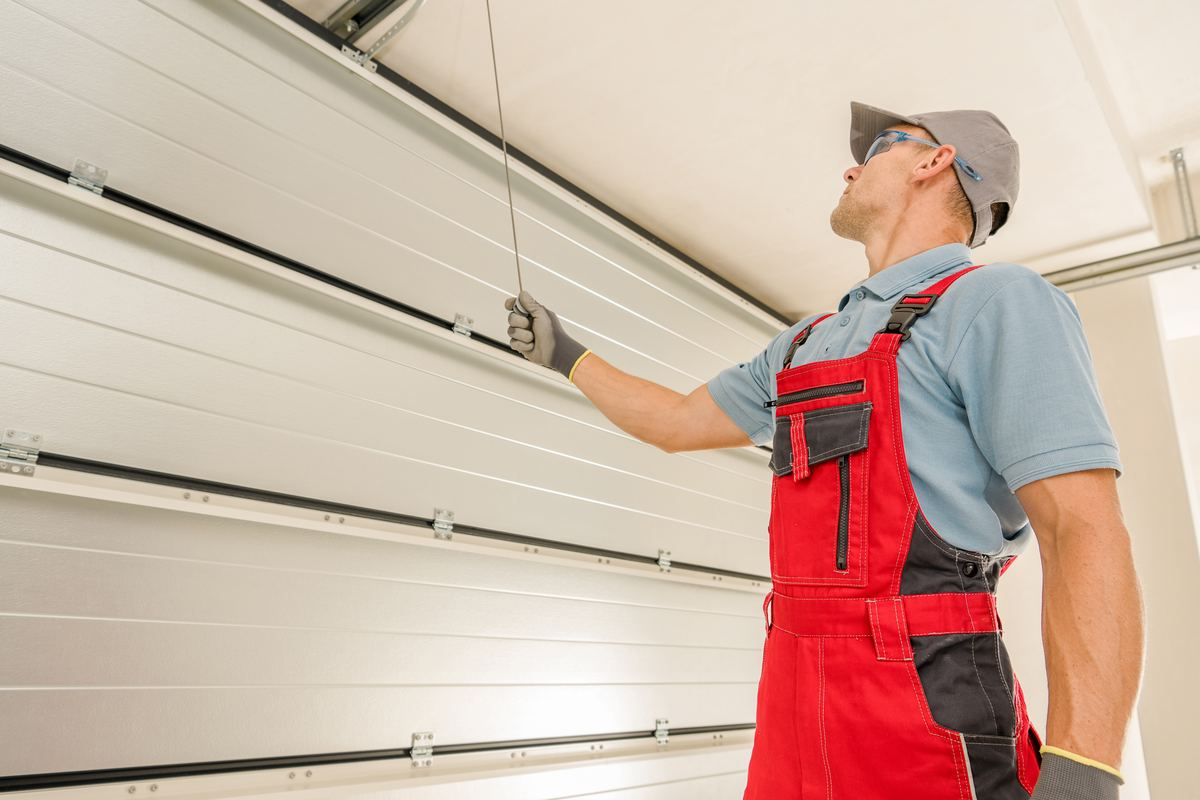
What does a real garage door tune-up include?
A legitimate tune-up is a system inspection with adjustments, and you should be able to see the checklist. Expect, at minimum: a visual inspection of springs for gaps, rust, and stretched coils, and of cables end to end for fraying, rust, and proper seating on the drums; every hinge, bracket, and lag screw checked and tightened, because vibration loosens hardware relentlessly; rollers inspected for cracks, flat spots, and bearing play; track checked for plumb, level, spacing, and dents, and re-aligned as needed; lubrication of springs, hinges, roller bearings, and the opener's rail or chain with a garage-door-rated lubricant — not a general-purpose penetrating spray, which strips grease rather than replacing it; the door balance test, run with the opener disconnected; the opener's travel limits and force settings verified; both federal-era safety systems tested — photo-eye interruption and contact auto-reverse against an obstruction; weather seal condition noted around the full perimeter; and a written summary of findings. The whole visit typically fits within an hour. Anything sold as a tune-up that skips the balance test and safety checks is a lubrication drive-by, whatever the flyer said.
Why is the balance test the heart of the visit?
Because balance is where the door's biggest, most expensive failures announce themselves early. The test is simple: with the opener disconnected, the technician lifts the door by hand to roughly waist height and lets go. A properly counterbalanced door floats there — the springs are carrying almost exactly the door's weight. A door that sinks is undersprung or has fatiguing springs; a door that rides upward is oversprung. Either way, every automatic cycle is making the opener fight the imbalance, and openers are built to guide a balanced door, not to hoist an unbalanced one — the motor, drive gear, and trolley absorb that fight until one of them quits, usually well before its time. Imbalance also loads cables and bottom fixtures unevenly, accelerating exactly the failures that strand doors crooked in their tracks. Catching drift at the annual visit means a spring adjustment — winding in or letting out tension — instead of a dead opener plus tired springs eighteen months later. It is also the test that most bait-priced tune-up offers quietly omit, because doing it honestly takes time and doing it dishonestly creates the scare-pitch moment. Watch for it; insist on it.
How often does a garage door need professional maintenance?
Annually is the honest default for a typical family door, and the reasoning is arithmetic rather than habit. Hardware fatigue on a garage door tracks cycles, not years: springs carry cycle ratings, roller bearings and hinges wear by use, and lag screws loosen with vibration. A household that opens the door four to six times a day — the normal rhythm of a home where the garage is the front door — puts well over a thousand cycles a year on the system, enough for measurable spring drift and hardware loosening between visits. Doors that work harder deserve a semiannual look: households with several drivers, home businesses with deliveries, and doors past their first decade, where more components are in the back half of their service life. Harsh climates argue for the same — coastal salt air corrodes cables and springs, and hard freeze-thaw cycles are brutal on rubber and metal alike. Between professional visits, the homeowner's share is light: watch and listen during a full cycle each month, glance at the cables, keep the photo-eyes clean, and test the auto-reverse occasionally. What homeowners should not do is adjust springs, cables, or bottom fixtures — that tension is the professional's territory for good reason.
What can I safely maintain myself?
A fair amount, and an honest trade tells you so. Safe homeowner territory: lubricating hinges, roller bearings, and springs a few times a year with a garage-door-rated lithium or silicone product — sparingly, and never on the track itself, where rollers need to roll rather than slide, and grease only collects grit; wiping the photo-eye lenses and confirming the two sensors face each other squarely; snugging visibly loose hinge and bracket screws with hand tools; washing the door and inspecting the weather seals; and running the two safety tests — blocking the photo-eye beam while closing, and the contact-reversal test with a piece of lumber laid flat on the floor. The monthly listen-and-watch of one full cycle costs nothing and catches most problems early: new noises, hesitation at a consistent spot, shuddering, or a door that looks off-level at the floor. The bright line on the other side: anything under spring tension — the springs themselves, the cables, the drums, the bottom brackets those cables anchor to — and any structural adjustment of track. Those parts store enough energy to cause serious injury, they are the source of most garage door ER visits, and every reputable manufacturer marks them professional-only. Knowing where the line sits is itself the most valuable maintenance skill.
How do I spot a bait tune-up offer?
The tune-up is this industry's favorite bait, so learn the tell-tale pattern. It starts with an advertised price too low to cover a technician's drive time — that number is not a tune-up, it is admission to your garage. Once inside, the script inverts: instead of maintaining the door, the visit becomes a scare inspection producing a long list of urgent replacements — springs, bearings, rollers, cables, opener — often bundled into tiered rebuild packages with pressure to sign today. Some of those parts genuinely wear together, which is what makes the pitch effective; the difference between honesty and theater is evidence. A legitimate technician shows you each defect — the frayed strand, the cracked roller, the door that will not hold its balance — explains which items are safety-relevant versus merely aging, tells you what can wait, and leaves you a written report to decide on without pressure. Our own policy exists because of this pattern: we publish no prices, we advertise no teaser services, and the companies we refer know that scare-selling a referred customer ends the relationship. A tune-up should end with a healthier door and a short honest punch list — not a financing conversation.