A garage door is the largest moving object in a Menlo Park home, and when it fails it rarely fails quietly. Whether yours won't open, won't close, or let go with a bang, this guide covers what you can safely check yourself first β and connects you with an independent local professional the moment the job calls for real tools and training.

Bay Area garages are famously improvised: tuck-under single bays beneath San Francisco rowhouses, detached one-car garages behind Oakland bungalows, and the low-slung attached garages of San Jose's postwar tracts and Fremont's 1960s-70s subdivisions. Many are minimal by modern standards β seven-foot openings, wood doors, original hardware. A median build year around 1972 means a great many openers predate the 1993 federal auto-reverse rule. Marine damp is the region's signature wear: fog and salt air corrode springs and cables from San Francisco through Oakland and Hayward, and in Salinas the coastal moisture reaches well up the valley. Hillside foundations shifting over decades also pull tracks subtly out of alignment.
The ZIP codes this page covers are home to roughly 40,230 residents, with a median home built in 1961, and a median household income near $215,871 (U.S. Census Bureau, ACS 2023). About 59% of occupied homes here are owner-occupied β and owners, not landlords, make most garage-door decisions. That build year matters more than it looks: openers installed before 1993 aren't covered by the federal auto-reverse requirement, so Menlo Park has a higher-than-average share of garages worth testing against the modern standard.
Every call type below routes to an independent local professional β factual descriptions, no teaser pricing, ever.
Dead motor, blinking lights, no response. All major brands, diagnosed honestly.
Learn more βSmartWi-Fi openers, keypads, and phone control installed and paired correctly.
Learn more βMoney callThe loud bang and a door that won't lift. Torsion and extension springs β the one repair pros exist for.
Learn more βCables & tracksFrayed cables, bent track, worn rollers β the parts that keep a door moving straight.
Learn more βOff-trackHanging crooked or jumped the rails? Don't force it β that multiplies the damage.
Learn more βPanelsOne dented section doesn't have to mean a whole new door β when panels are still made.
Learn more βBig ticketSteel, wood, insulated, modern glass β full replacement quoted with the door in front of them.
Learn more β24/7Stuck open at midnight is a security problem. Off-hours routing to someone who answers.
Learn more βCommercialRolling steel, dock doors, and gate operators for shops, warehouses, and lots.
Learn more βWeatherproofingBottom seals, thresholds, and insulation that keep weather and critters out.
Learn more βTune-upThe annual once-over that catches wear before it becomes an emergency.
Learn more βStorm-ratedWind-load rated doors where codes require them β and where storms don't care about codes.
Learn more βHere's a fact that surprises most Menlo Park homeowners: garage doors are covered by federal safety law. Since January 1, 1993, every residential opener sold in the U.S. must reverse automatically on contact with an obstruction β entrapment protection required by UL 325 and 16 CFR Part 1211, standards written after documented child entrapment deaths.
The practical upshot: put a 2Γ4 flat under the door, hit close, and watch. Reverse-on-contact is the law working. A door that keeps pressing β or an opener with no sensor eyes by the floor β belongs to the pre-1993 era, and modernizing it is a straightforward professional job.
Sources: U.S. Consumer Product Safety Commission Β· UL Standards & Engagement Β· 16 CFR Part 1211 Β· DASMA
You'll see factors here, never prices β advertised teaser fees are the industry's signature bait, and we refuse them on principle. These are the honest variables a written quote should reflect.
The span of the door changes everything downstream β spring torque, track hardware, opener force. Two single doors and one double are different jobs even in the same Menlo Park garage.
Thicker-gauge steel and insulated sandwich construction cost more per section but resist dents and temperature swings; in high-heat climates the insulation often pays for itself in door longevity.
Spring steel is rated in cycles. Standard-cycle springs suit a lightly used door; a door that runs six times a day deserves high-cycle steel, and the price difference is honest value, not upsell.
Openers past their service life often lack modern entrapment protection and replacement parts. Sometimes repairing an obsolete unit costs more than a current one installed.
Coastal salt air, gravel-dust roads, and freeze-thaw cycles each shorten hardware life in their own way, and local pros price durability options accordingly.
Two minutes of prep makes the call twice as useful. Note what the door does β hums, clicks, silent, half-opens β and any sound that preceded the failure; a single loud bang usually means a spring. Snap a photo of the opener's model sticker (on the motor housing) and of the door from inside. Know roughly when the opener was installed, and whether the door is a single or double. With those details, the pro we connect you with can arrive with likely parts on the truck instead of scheduling a second trip.
For tenants, a failed garage door is usually the landlord's responsibility β the door is part of the structure, like a roof or a furnace. Document the failure with photos, report it in writing, and don't authorize repairs yourself unless your lease says otherwise. Landlords and property managers: a door that won't secure the garage is the kind of habitability-and-security item worth fast-tracking, and an annual tune-up across your units costs less than one emergency call. Either way, the pros we connect with work with both owners and managers.
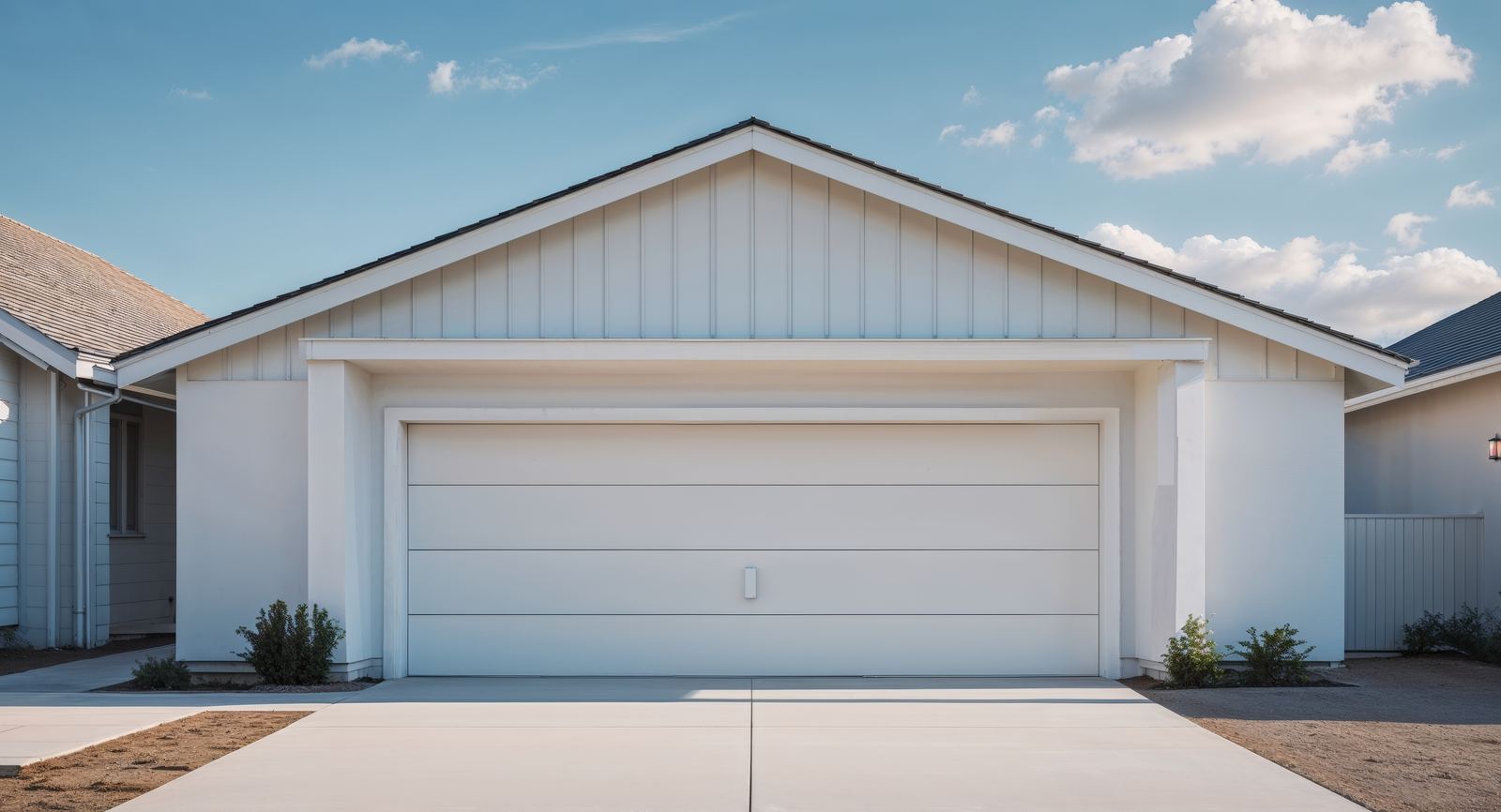
Half the "emergencies" the bait shops charge for are two-minute fixes. Start here β it's what an honest neighbor would tell you to do.
When a door opens fine but refuses to close β especially if it reverses immediately and the opener light flashes β theβ¦
Read the free checks βFix-It guideA door that stops at the same spot every time usually has a mechanical obstruction or a travel-limit setting problem; aβ¦
Read the free checks βFix-It guideWhen it reverses matters more than that it reverses. Instant reversal before the door really moves points to theβ¦
Read the free checks βThe questions Menlo Park homeowners actually type, answered without the runaround.
Independent local professionals β not a national chain, not a call-center franchise. We maintain a network of screened garage-door specialists and route Menlo Park calls to one who covers your neighborhood. Dial (888) 830-7442 and you're one conversation from a real diagnosis.
Verify a license where California requires one, insist on a written itemized quote, and walk away from any advertised teaser fee. Or skip the vetting: that screening is exactly what our network is for. We route Menlo Park calls to independent pros who work the honest way.
Torsion springs store violent energy and injure thousands of people a year β the CPSC's injury data on garage doors makes sober reading. Winding bars, correct spring specs, and trained hands exist for a reason. This is the one repair we always route to a pro.
The network handles all major brands β LiftMaster, Chamberlain, Genie, Craftsman openers; Clopay, Amarr, Wayne Dalton, Overhead Door, Raynor, and CHI doors among others. Our brand guides explain each maker's diagnostic codes and where to find your model number.
Nothing. We never charge homeowners, and we refuse the teaser-fee games this industry is known for. Any pricing is between you and the professional you choose, quoted after they've actually seen your door.
Rule of thumb: one damaged panel on a current model repairs well; structural rust, obsolete panels, or repeated failures argue for replacement. An honest pro walks you through both numbers with the door in front of them β never sight-unseen.
Often, especially for genuine emergencies β a door stuck open, a vehicle trapped, a snapped spring. Availability in Menlo Park varies by day and season; the fastest way to know is to call and ask. We'll connect you with someone who can give you a real answer, not a promise.
Since January 1, 1993, US-sold residential openers must reverse automatically when the door meets an obstruction β UL 325 and 16 CFR Part 1211, written after documented child entrapment deaths. Millions of older openers predate it. The 30-second test: lay a 2Γ4 flat under the door and close it β the door must reverse on contact.
Calls from these California ZIP codes route to pros serving the Menlo Park area.
The same network covers the neighboring communities β each with its own local page.
Talk to a local garage-door pro now. Free to call, no obligation, honest answers β the way it should be.