Most West Chicago homeowners touch their garage door more times a day than their front door, and never think about it until the morning it won't move. The good news: a surprising share of 'broken' doors are free fixes β a blocked sensor, an unpaired remote, a locked track. The rest deserve a trained technician, and that's where we come in.

Collar-county subdivisions built the modern image of Chicagoland: Naperville and Plainfield's 1980s-2000s two-story homes with attached two- and three-car garages, Aurora and Elgin layering new growth over old river-town cores, Joliet and Waukegan mixing industrial-era housing with newer edges. A 1983 median build year still leaves many openers from before the 1993 federal auto-reverse requirement in service, especially in the older neighborhoods. Northern Illinois winters do the damage on a schedule: freeze-thaw cycles crack and heave driveway aprons, salt-laden slush corrodes door bottoms and hardware, and January cold snaps stiffen springs until the first warm week reveals which ones are done. Summer brings derecho-grade winds worth respecting too.
The ZIP codes this page covers are home to roughly 33,711 residents, with a median home built in 1977, and a median household income near $105,063 (U.S. Census Bureau, ACS 2023). About 79% of occupied homes here are owner-occupied β and owners, not landlords, make most garage-door decisions. That build year matters more than it looks: openers installed before 1993 aren't covered by the federal auto-reverse requirement, so West Chicago has a higher-than-average share of garages worth testing against the modern standard.
Every call type below routes to an independent local professional β factual descriptions, no teaser pricing, ever.
Cycle-rated replacements installed with winding bars and respect for stored energy.
Learn more βTune-upSmall adjustments now beat big invoices later β the whole trade in one sentence.
Learn more βOpenersThe motor is rarely the whole story β force settings, sensors, and gears tell the rest.
Learn more βCables & tracksQuiet nylon rollers and true track turn a banging door into a background hum.
Learn more βOff-trackRe-seated, re-aligned, and root-caused so it doesn't jump again next month.
Learn more βPanelsMatch the profile, match the color, keep the rest of a perfectly good door.
Learn more βBig ticketMeasured twice, sprung correctly, sealed at the edges β and the old door hauled away.
Learn more β24/7Off-hours calls routed to pros who actually answer at off hours.
Learn more βCommercialRolling steel, high-cycle springs, and operators specced for daily punishment.
Learn more βWeatherproofingThe easiest comfort upgrade in the house is at the bottom of the garage door.
Learn more βSmartOpeners that text you when the door's been open twenty minutes. Peace of mind, installed.
Learn more βStorm-ratedWhen the forecast turns serious, the garage door is the house's front line.
Learn more βFew West Chicago homeowners know their opener is federally regulated hardware. Since January 1, 1993, every residential opener sold in the U.S. must reverse automatically on contact with an obstruction β entrapment protection required by UL 325 and 16 CFR Part 1211, standards written after documented child entrapment deaths.
Verify it in under a minute: interrupt the sensor beam mid-close (it should reverse), then the lumber test on the floor (contact must reverse it). Failing either puts the door outside a federal standard written after documented tragedies β and a local pro can bring it current, often the same day.
Sources: U.S. Consumer Product Safety Commission Β· UL Standards & Engagement Β· 16 CFR Part 1211 Β· DASMA
You'll see factors here, never prices β advertised teaser fees are the industry's signature bait, and we refuse them on principle. These are the honest variables a written quote should reflect.
The span of the door changes everything downstream β spring torque, track hardware, opener force. Two single doors and one double are different jobs even in the same West Chicago garage.
Thicker-gauge steel and insulated sandwich construction cost more per section but resist dents and temperature swings; in freeze-prone climates the insulation often pays for itself in door longevity.
Spring steel is rated in cycles. Standard-cycle springs suit a lightly used door; a door that runs six times a day deserves high-cycle steel, and the price difference is honest value, not upsell.
Openers past their service life often lack modern entrapment protection and replacement parts. Sometimes repairing an obsolete unit costs more than a current one installed.
Coastal salt air, gravel-dust roads, and freeze-thaw cycles each shorten hardware life in their own way, and local pros price durability options accordingly.
You'll notice this page names cost factors but never a number. That's deliberate. The advertised teaser fee that balloons on the driveway is this industry's signature scam β the pattern behind waves of fake listings that get purged from search results every year. No honest company can price a spring job without knowing your door, and neither can a website. What we can do is connect you with an independent local professional who quotes after seeing the door, in writing, with parts named. That's the standard worth holding out for.
Two minutes of prep makes the call twice as useful. Note what the door does β hums, clicks, silent, half-opens β and any sound that preceded the failure; a single loud bang usually means a spring. Snap a photo of the opener's model sticker (on the motor housing) and of the door from inside. Know roughly when the opener was installed, and whether the door is a single or double. With those details, the pro we connect you with can arrive with likely parts on the truck instead of scheduling a second trip.
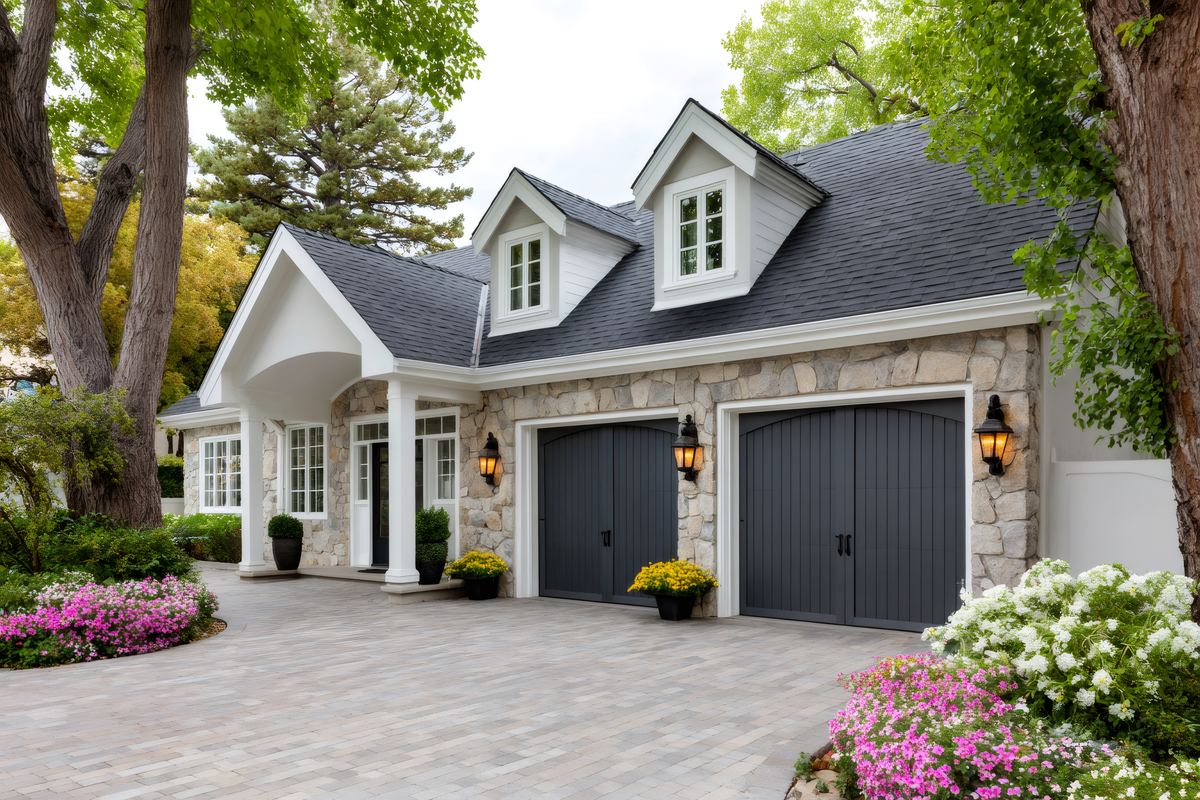
Half the "emergencies" the bait shops charge for are two-minute fixes. Start here β it's what an honest neighbor would tell you to do.
A door that stops at the same spot every time usually has a mechanical obstruction or a travel-limit setting problem; aβ¦
Read the free checks βFix-It guideWhen it reverses matters more than that it reverses. Instant reversal before the door really moves points to theβ¦
Read the free checks βFix-It guideA blinking opener light is a diagnostic code, not random flickering. On LiftMaster, Chamberlain, and Craftsman openers,β¦
Read the free checks βThe questions West Chicago homeowners actually type, answered without the runaround.
Skip the ad maze. Try the free checks on this page first; if the door still won't behave, call (888) 830-7442. We connect West Chicago homeowners with an independent local pro β usually in a single phone call, at any hour.
Springs are the most common emergency in this trade, and local pros stock the common sizes on their trucks. In and around West Chicago, same-day spring replacement is often realistic β call and we'll connect you with someone who can confirm against their actual schedule.
It varies by municipality. Like-for-like replacement often doesn't require one, while structural changes or wind-rated installs may. The pro we connect you with will know Illinois's norms β and pulling a required permit is a sign you've hired the right kind of company.
Sometimes, honestly, yes. Sensor realignment, remote re-pairing, track lubrication, and the wall-button lock are safe, free checks we explain openly. Springs, cables, and off-track doors are not DIY territory β that hardware is under real tension.
Grinding usually means dry rollers or hinges β a garage-door-rated lubricant quiets most of it, free. Banging or popping under load is more serious; springs and bearings under strain deserve a professional look before something lets go.
It depends on the hour and the season, but the network we route to includes independent professionals who handle emergency and after-hours calls in the West Chicago area. Call and we'll connect you with someone who can tell you their real availability.
You reach our routing line, tell us what the door is doing and your location, and we connect you with an independent local garage-door professional serving West Chicago. They take it from there β scheduling, diagnosis, and any quote happen directly between you and them.
Since January 1, 1993, US-sold residential openers must reverse automatically when the door meets an obstruction β UL 325 and 16 CFR Part 1211, written after documented child entrapment deaths. Millions of older openers predate it. The 30-second test: lay a 2Γ4 flat under the door and close it β the door must reverse on contact.
Calls from these Illinois ZIP codes route to pros serving the West Chicago area.
The same network covers the neighboring communities β each with its own local page.
Talk to a local garage-door pro now. Free to call, no obligation, honest answers β the way it should be.